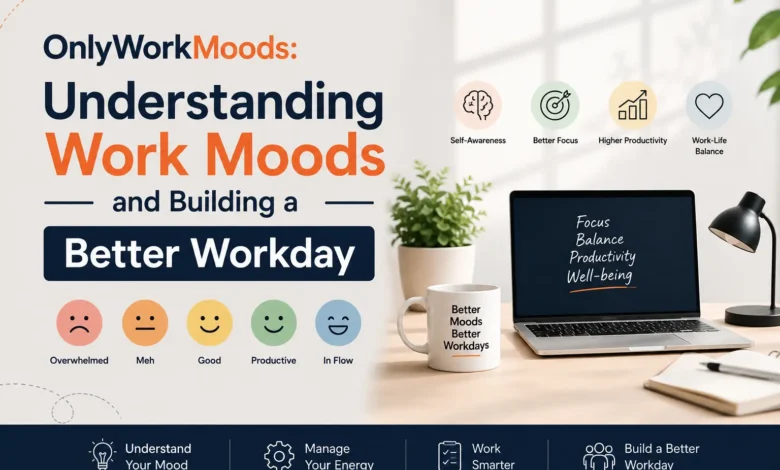
OnlyWorkMoods: Understanding Work Moods and Building a Better Workday.

Introduction
Work is more than a list of tasks, meetings, deadlines, and emails. How you feel while doing that work can influence how you approach challenges, communicate with others, stay focused, and move through your day. That is where the idea behind OnlyWorkMoods becomes relevant.
Work moods can change throughout the day. You might begin with energy and motivation, feel distracted after several hours, become stressed before an important deadline, or finish the day feeling satisfied after completing something meaningful.
Understanding these changes can help you make better choices about your routines and working environment. This guide explores what work moods mean, what can influence them, how they can affect your working experience, and practical ways to create a more positive and productive workday.
Important note: Work mood is a general lifestyle and workplace concept, not a scientific diagnosis. Individual experiences can vary considerably depending on personality, circumstances, workload, environment, and many other factors.
What Does “OnlyWorkMoods” Mean?
OnlyWorkMoods can be understood as a concept centered around the emotional and mental side of working life.
Instead of looking at work only through productivity, deadlines, or career advancement, the idea puts attention on how people experience their working days.
A work mood can describe the emotional state you experience while working, such as:
- Motivated
- Focused
- Creative
- Calm
- Energized
- Bored
- Distracted
- Frustrated
- Overwhelmed
- Satisfied
These moods aren’t necessarily permanent. Someone can experience several different moods during the same workday.
For example, you might feel highly motivated while starting a creative project but become frustrated when dealing with repetitive administrative work. Later, finishing the project could leave you feeling accomplished.
This changing experience is an important part of understanding work moods.
Why Do Work Moods Matter?
Your mood is not the only factor that determines how well you work, but it can influence your overall experience.
When you feel comfortable and focused, it may be easier to concentrate on a task. When you are distracted, frustrated, or mentally tired, the same task may feel considerably more difficult.
A better understanding of work moods can help you identify patterns rather than simply labeling an entire day as “good” or “bad.”
Work mood can influence:
- Focus: How easily you concentrate on a particular task.
- Motivation: How willing you feel to begin or continue working.
- Creativity: How open you feel to generating new ideas.
- Communication: How you interact with colleagues, clients, or teammates.
- Decision-making: How you approach everyday work choices.
- Job satisfaction: How you feel about your overall working experience.
The goal isn’t to feel positive every minute.
Instead, it is about recognizing what affects your mood and finding practical ways to work more effectively.
What Can Affect Your Work Mood?
There isn’t one universal reason why someone feels motivated or frustrated at work. Work moods are shaped by a combination of personal and environmental factors.
1. Workload
A manageable workload can make tasks feel organized and achievable.
On the other hand, constantly dealing with competing deadlines or an unclear list of priorities can make work feel overwhelming.
One useful approach is to separate your tasks into:
- Urgent and important
- Important but not urgent
- Routine tasks
- Tasks that can be postponed or delegated when appropriate
This simple categorization can make a busy day easier to navigate.
2. Your Working Environment
Your surroundings can affect how comfortable you feel while working.
For some people, a quiet desk improves concentration. Others may enjoy a collaborative environment where they can exchange ideas.
Your environment may include:
- Noise levels
- Lighting
- Desk organization
- Temperature
- Workspace comfort
- Digital distractions
- Availability of private or collaborative areas
There is no single “perfect” workplace setup for everyone.
The better question is: What environment helps you do your best work?
3. Relationships at Work
People spend significant amounts of time interacting with colleagues, managers, clients, customers, and other professionals.
Positive communication can make collaboration easier, while repeated misunderstandings or conflict can make the workplace feel stressful.
Small habits can improve everyday interactions:
- Listen before responding.
- Be clear about expectations.
- Ask questions when instructions are unclear.
- Give constructive feedback.
- Respect different working styles.
- Avoid unnecessary workplace drama.
Healthy communication doesn’t mean everyone has to agree.
It means people can disagree while remaining professional and respectful.
Common Work Moods You May Experience
Everyone’s experience is different, but several work moods are common.
| Work Mood | What It May Feel Like | Helpful Response |
|---|---|---|
| Motivated | Ready to take action | Use the energy for important tasks |
| Focused | Deep concentration | Reduce unnecessary interruptions |
| Creative | Full of ideas | Capture ideas before they disappear |
| Calm | Comfortable and steady | Use the time for thoughtful work |
| Bored | Tasks feel repetitive | Add variety or learn something new |
| Distracted | Difficulty concentrating | Remove obvious interruptions |
| Frustrated | Obstacles feel irritating | Identify the specific problem |
| Overwhelmed | Too many demands at once | Prioritize and break tasks into steps |
| Satisfied | Work feels meaningful | Recognize what contributed to that feeling |
The important point is that a negative work mood doesn’t automatically mean something is wrong with your career.
Sometimes it simply signals that you need a break, a clearer priority, a different approach, or better communication.
How to Improve Your Work Mood
You don’t need to completely change your career or workplace to make your workday feel better.
Small adjustments can sometimes make a noticeable difference in how you approach your day.
Start With a Simple Priority List
Instead of beginning the morning by reacting to every notification, identify the most important tasks first.
Ask yourself:
“If I could complete only three meaningful things today, what would they be?”
This creates a clearer starting point and can reduce the feeling of having an endless list of responsibilities.
Take Short Breaks
Working continuously for long periods can make it harder to maintain attention.
Short breaks give you an opportunity to step away from the immediate task.
Depending on your workplace, a break could involve:
- Walking around
- Getting water
- Stretching
- Looking away from your screen
- Having a brief conversation
- Simply pausing before starting the next task
The best approach depends on your work responsibilities and schedule.
Reduce Digital Distractions
Notifications can repeatedly pull attention away from important work.
Consider turning off nonessential notifications while completing tasks that require concentration.
You can also:
- Close unnecessary browser tabs.
- Keep your phone away during focused work.
- Check email at planned times.
- Use separate periods for communication and deep work.
The objective isn’t to eliminate technology.
It’s to make technology work for you rather than constantly interrupting you.
Creating a Better Work Mood at Home
Remote work introduces a different set of challenges.
When your home and workplace are the same location, it can become difficult to create a clear boundary between professional and personal time.
A few practical habits can help.
Create a dedicated work area
Even a small, consistent workspace can help create a psychological distinction between working and relaxing.
Build a start-of-day routine
Something as simple as getting ready, organizing your desk, and reviewing your priorities can signal that the workday has begun.
Create an end-of-day routine
Closing your laptop, organizing tomorrow’s priorities, and physically leaving your workspace can help establish a clearer transition away from work.
Work Mood and Productivity: What’s the Connection?
Productivity isn’t simply about doing more tasks.
A productive workday is often about making meaningful progress on the things that matter.
Your mood may influence how you approach that process.
For example:
Positive or comfortable mood → better engagement → easier task initiation
But this shouldn’t be interpreted as a strict formula. People can be productive even when they aren’t feeling particularly positive, and someone who feels happy isn’t automatically productive.
That’s why OnlyWorkMoods is better understood as a broader approach to thinking about the working experience rather than a promise that a particular mood will produce a particular result.
How to Track Your Work Moods
One simple way to understand your own work patterns is to keep a short mood journal.
You don’t need a complicated system.
At the end of each workday, write down:
- Mood: How did I feel today?
- Energy: Did I feel energetic or tired?
- Task: What was I working on?
- Environment: Where was I working?
- Challenge: What made the day difficult?
- Win: What went well?
After several weeks, you may begin to notice patterns.
Perhaps you concentrate better in the morning. Maybe meetings affect your energy, or you feel more motivated when working on creative projects.
Those observations can help you make more informed decisions about your working habits.
A Simple OnlyWorkMoods Routine
If you want a straightforward approach, try this five-step routine.
1. Check in
Before starting work, ask:
“How am I feeling right now?”
Don’t judge the answer. Simply notice it.
2. Choose your priority
Identify the most important task for the day.
3. Protect your focus
Reduce unnecessary interruptions while completing that task.
4. Reset when needed
If your concentration drops, take an appropriate short break rather than forcing yourself through every task without pause.
5. Reflect
At the end of the day, identify one thing that worked and one thing you could improve tomorrow.
This approach keeps the process simple enough to become a routine.
OnlyWorkMoods Isn’t About Being Positive All the Time
One of the most important ideas behind understanding work moods is that you don’t need to feel happy all the time.
Every professional has difficult days.
You may have:
- A stressful deadline
- A frustrating customer
- A difficult conversation
- A repetitive assignment
- A mistake to correct
- A day when motivation simply isn’t there
Trying to force constant positivity can be unrealistic.
Instead, aim for awareness and adaptability.
If you recognize that you’re frustrated, you can ask why.
If you’re distracted, you can look for the source.
If you’re overwhelmed, you can reconsider your priorities.
That is more practical than pretending every workday should feel perfect.
Work Moods for Different Types of Workers
Work mood isn’t limited to traditional office employees.
Students and young learners
Students can use the same ideas while studying or preparing for future careers. Creating a comfortable study environment, reducing distractions, and organizing priorities can help make study sessions more manageable.
Remote workers
Remote professionals may benefit from stronger boundaries between work and personal time.
Freelancers
Freelancers often manage their own schedules, which makes routines and self-management particularly important.
Entrepreneurs
Business owners may experience constantly changing priorities. Identifying which activities create energy and which consistently drain attention can help with better scheduling.
Office professionals
Employees working in offices may focus on communication, workspace habits, meeting load, and task organization.
The specific solution changes, but the underlying principle remains the same: pay attention to how your work affects your daily experience.
Practical Tips for a Healthier Workday
Here are some simple ideas you can experiment with:
- Start your day with a clear priority.
- Keep your workspace reasonably organized.
- Take appropriate breaks.
- Limit unnecessary notifications.
- Communicate expectations clearly.
- Avoid multitasking when deep concentration is required.
- Make time for movement when your schedule allows.
- Keep realistic boundaries between work and personal life.
- Review what went well at the end of the day.
- Adjust your routine based on what you learn about yourself.
Not every suggestion will work for every person.
Experimentation is part of the process.
Frequently Asked Questions About OnlyWorkMoods
What is OnlyWorkMoods?
OnlyWorkMoods is a concept focused on understanding and improving the emotional experience of work. It considers factors such as motivation, focus, workplace environment, communication, habits, and productivity.
What are work moods?
Work moods are the different emotional states a person may experience while working. These can include motivation, focus, calmness, boredom, frustration, stress, creativity, and satisfaction.
How can I improve my work mood?
You can improve your work mood by identifying what affects it and making practical adjustments. Prioritizing tasks, reducing distractions, taking suitable breaks, improving your workspace, and maintaining healthy boundaries are useful places to start.
Does a positive mood always make you more productive?
No, a positive mood does not automatically make someone productive. Productivity depends on many factors, including skills, workload, environment, priorities, resources, and the nature of the task.
Can OnlyWorkMoods apply to remote work?
Yes, the concept can apply to remote work as well as office-based work. Remote workers can pay particular attention to workspace design, daily routines, communication, and boundaries between work and personal time.
Should I try to be positive at work all the time?
No, constant positivity is neither necessary nor realistic. A healthier approach is to recognize different emotions, understand what may be causing them, and respond to challenges constructively.
Final Thoughts: Making Work Feel More Manageable
OnlyWorkMoods is ultimately about paying attention to the human side of work.
A career isn’t simply a collection of tasks and achievements. It is also made up of everyday experiences—how you start your morning, how you handle pressure, how you communicate, how you focus, and how you feel when the workday ends.
You don’t have to completely transform your working life to begin improving it.
Start small.
Notice your mood. Identify what influences it. Experiment with your routine. Keep the habits that genuinely help and change the ones that don’t.
A better workday doesn’t have to mean a perfect workday. Sometimes, it simply means understanding yourself a little better and making work more manageable, focused, and sustainable.
